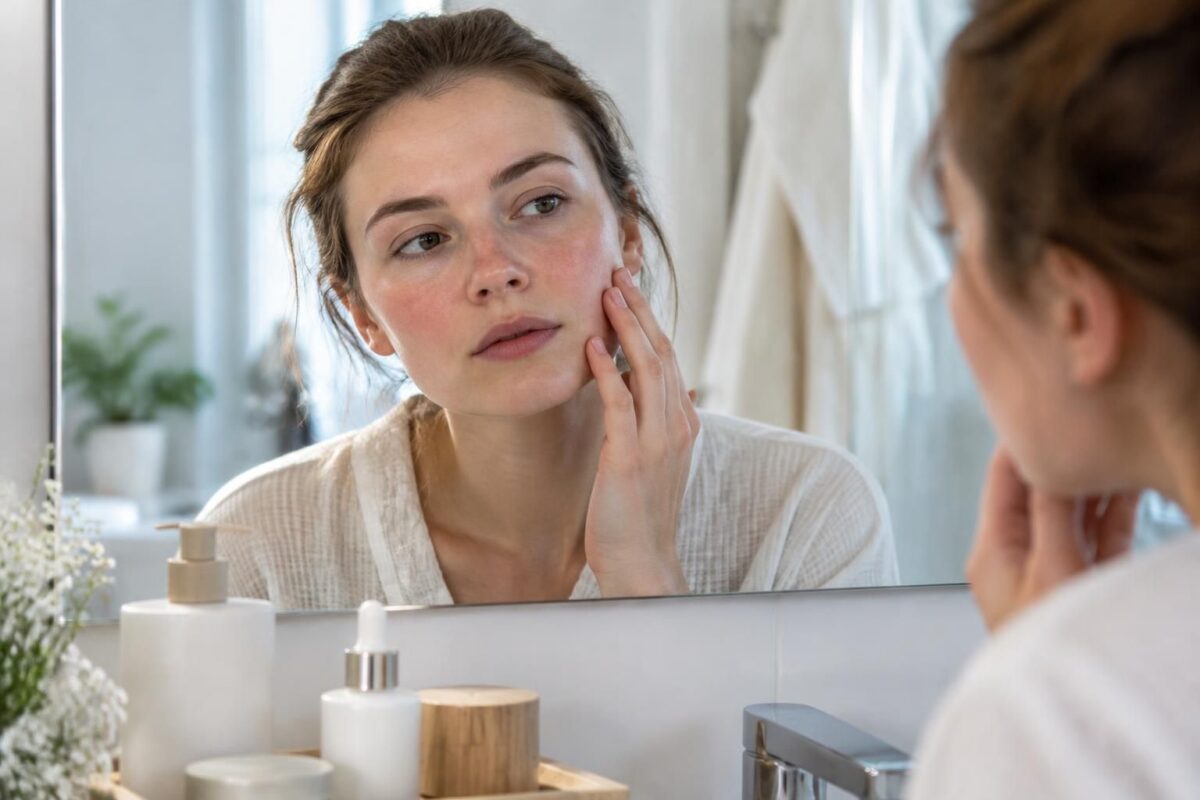
Sensitive skin: is the redness on your cheeks caused by your skincare routine?
Hi, it’s Aurore.
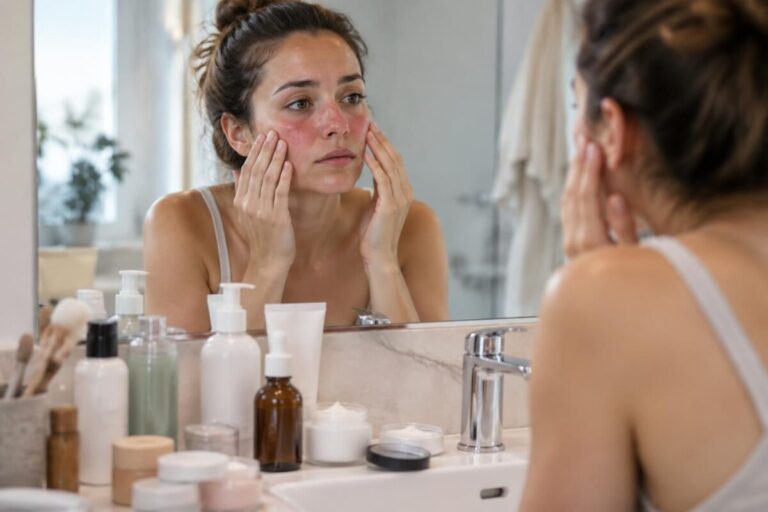
Yes, your routine may be causing redness on your cheeks: pause products that sting and switch to a gentle cleanser, a soothing cream, and sun protection. On sensitive skin, a weakened skin barrier reacts more easily to cosmetics, as well as to cold, sun, or stress. The goal isn’t to add another product, but to identify the trigger and simplify your skincare routine. If the redness persists, burns, or is accompanied by patches, dermatological advice can help identify the cause.
“Do this right away”
- Stop using products that cause stinging or a feeling of warmth for a few days.
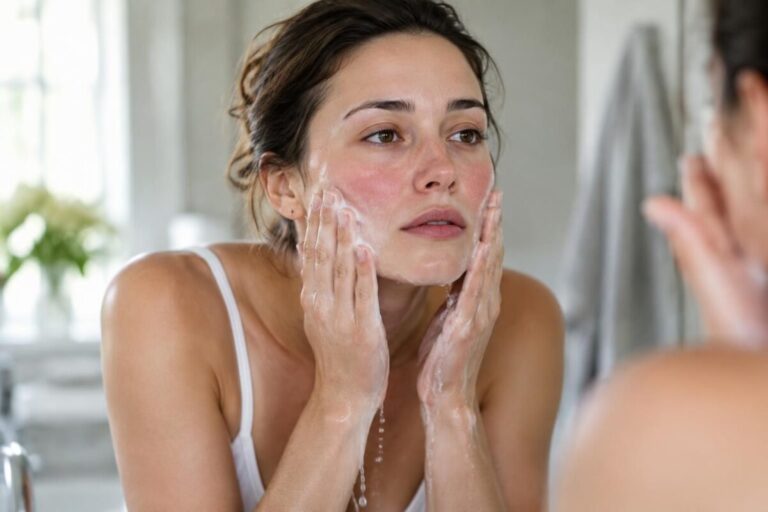
- Choose a fragrance-free cleanser and wash your face with lukewarm water, without scrubbing.
- Apply a simple moisturizer morning and evening.
- Protect your cheeks from the sun with broad-spectrum sunscreen, SPF 30 or higher.
- Test each new product on a small area before using it on your whole face.
Why your routine may make your cheeks red
A harsh cleanser, exfoliating too often, or a fragranced formula can cause skin irritation. When the skin’s protective layer is weakened, irritants can penetrate more easily, and the skin may sting, feel hot, or turn red.
A reaction to cosmetics doesn’t always come from a product labeled “strong.” Even a gentle formula may not suit a particular person. As a useful skincare rule goes: “When your skin reacts, simplifying your routine is often the best first step.”
A real-life example: a friend used an acid exfoliant every night to smooth her skin. Her cheeks became red and sensitive within a few days; after stopping exfoliation and going back to simple skincare, she gradually felt more comfortable.
Common triggers for cheek redness
Your routine isn’t always the only cause. Wind, pollution, sun, and sudden temperature changes can also make your cheeks more reactive. Stress, heat, or a strong emotion can sometimes cause temporary flushing.
| Possible trigger | Common reaction | Helpful step |
|---|---|---|
| Fragrance, alcohol, or repeated exfoliation | Stinging, dryness, redness | Pause the product and simplify your skincare |
| Cold, wind, or water that’s too hot | Hot or tight-feeling cheeks | Protect and moisturize your skin, and avoid scalding water |
| Sun | Redness that worsens after exposure | Apply sunscreen and limit sun exposure |
| Stress or heat | Sudden, often temporary redness | Move somewhere cool and apply a cool compress |
If hot water seems to worsen your symptoms, these tips on the effect of hot water on redness may help you adjust your routine. And if your cheeks feel tight while your forehead is shiny, also find out how to adapt skincare for combination skin.
Two situations to tell apart
If your cheeks turn red after exercise, exposure to cold, or an emotional moment, then return to their usual color, it may be temporary flushing: let your skin cool down gradually. If the redness persists, itches, burns, or comes back often, seek medical advice to check for conditions such as dermatitis or rosacea.
Itchy patches, swelling, or a burning sensation after using a new cosmetic may also point to an allergy or significant irritation. Stop using the product in question and ask a healthcare professional for advice, especially if the symptoms spread or affect your eyes.
Three steps to calm reactive skin
- Step 1: Edit your routine. Set aside irritating products, especially frequent exfoliants, fragrances, and formulas that sting. Avoid changing several products at once: it will be easier to identify what’s triggering the reaction.
- Step 2: Cleanse without stripping your skin. Use a gentle cleanser with lukewarm water, morning and evening as needed. Pat your face dry with a clean towel instead of rubbing.
- Step 3: Soothe and protect. Apply a moisturizer suitable for sensitive skin. Pro-vitamin B5 or colloidal oatmeal may help improve comfort; in the morning, finish with suitable sun protection.
Soothing skincare helps keep your skin comfortable, but it cannot treat a skin condition on its own. For sensitive skin that feels tight, you can also read these tips about the step that helps soothe dry cheeks.
Good everyday habits
When the redness comes back, keep track for a few days of the products you use, the weather, and the circumstances: spicy food, a hot drink, stress, or sun exposure. This simple log may help reveal a personal trigger, since everyone’s skin reacts differently.
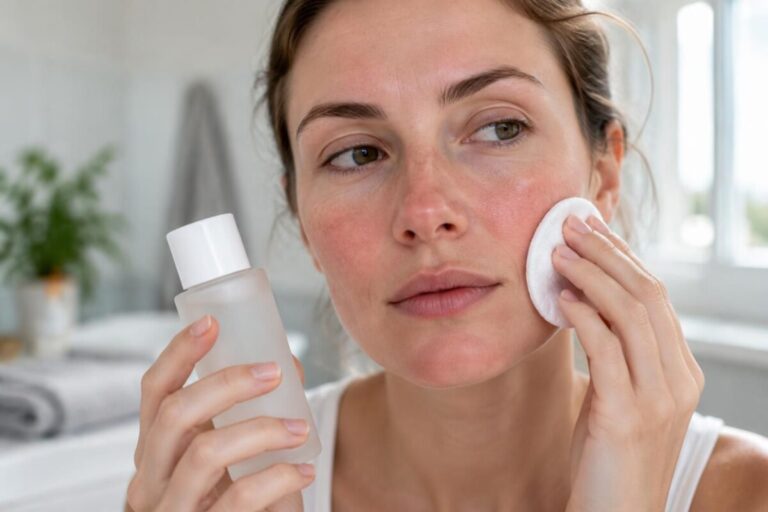
Avoid using multiple active ingredients at the same time, and don’t rub your cheeks with a cotton pad. A cool compress may provide temporary relief, while regular sun protection helps limit the sun’s effect on redness.
Frequently asked questions about red cheeks and skincare routines
Can a gentle product still cause redness?
Yes. Reactive skin may not tolerate a particular ingredient, even in a gentle formula. Stop using the product if a reaction occurs, and test new products on a small area.
Does cheek redness always mean rosacea?
No. It may be related to irritation, cold, sun, stress, or temporary flushing. If it persists or comes with other symptoms, seek medical advice.
What skincare should I choose when my skin feels hot?
Keep your routine short, and choose a gentle cleanser and a fragrance-free moisturizer. Pause exfoliants and products that sting until your skin feels comfortable again.
When should I see a doctor about red cheeks?
Seek medical advice if the redness lasts, comes back often, spreads, or is accompanied by itching, pain, swelling, or symptoms around the eyes.
Thanks for reading; Aurore. I’d be grateful if you could leave a comment at the bottom of the article. THANK YOU!