Anti-aging: Beware of the serum that irritates silently
Hi, it’s Aurore. If your serum causes tingling, redness, or tightness, stop using it for now and simplify your routine: even mild irritation should be taken seriously. With anti-aging products, a subtle reaction can develop before your skin becomes obviously uncomfortable. Retinol and exfoliating acids especially need to be introduced gradually. A useful preventive treatment shouldn’t weaken your skin barrier.
What to do right away
- Take a break if tingling or redness returns after application.
- Keep your routine short: a gentle cleanser, moisturizer, and sunscreen in the morning.
- Avoid using retinol and AHA or BHA exfoliants on the same night.
- Reintroduce one active ingredient at a time, at a low frequency.
- Ask a professional for advice if the reaction persists, worsens, or becomes painful.
Anti-aging serum: when irritation creeps up quietly
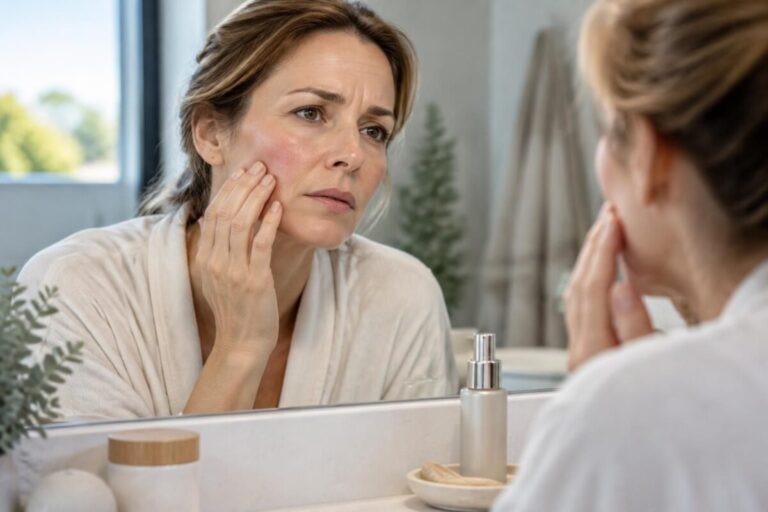
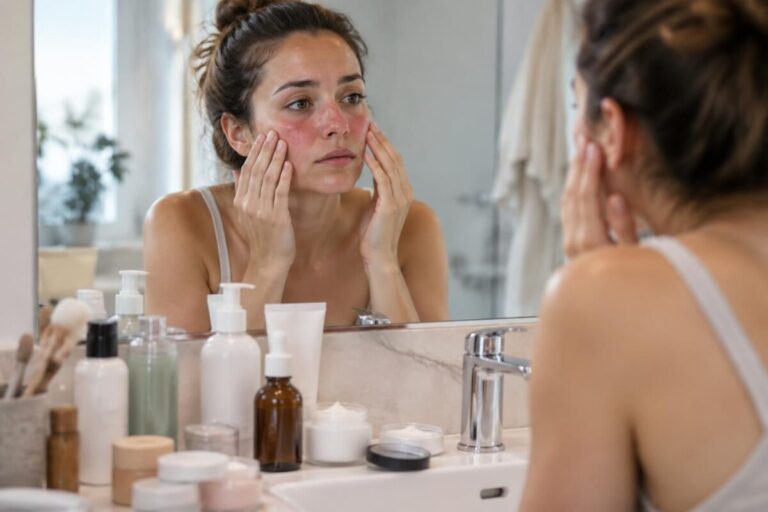
Irritated skin doesn’t always burn the first time you apply a product. At first, it may just seem drier, feel tight after cleansing, become red from time to time, or react to products it used to tolerate well. These signs alone don’t prove that your skin is irritated, but if they keep coming back, it’s a good reason to take a break.
The problem is that this reaction can be mistaken for a normal adjustment phase. But persisting with a serum that bothers your skin won’t speed up anti-aging results. On the contrary, it can make your routine less comfortable and weaken your skin barrier.
As this simple rule puts it: “An effective product should also be well tolerated.” If your skin regularly feels tight, it’s better to adjust how often you use it or reconsider the formula rather than adding a new product to compensate.
Subtle signs to watch for
Brief tingling can happen with certain active ingredients, but discomfort that keeps coming back, lasts, or gets worse shouldn’t be ignored. Also look out for redness, dry patches, a warm sensation, and unusual sensitivity to water or your usual moisturizer.
A fictional friend, Lina, noticed that her face tingled every evening after using her serum, even though there was no marked redness at first. By spacing out applications and returning to a simple routine, she was better able to identify what was triggering her discomfort.
Retinol and sensitive skin: adjust rather than push through
Retinol is an active ingredient often used to improve the appearance of fine lines and skin texture. But tolerance varies depending on the formula, how often it’s used, and each person’s sensitivity. Starting with nightly use or immediately combining it with an exfoliant increases the risk of discomfort.
If you have sensitive skin, start by applying it occasionally, for example once a week, then observe how your skin responds. If all goes well, you can gradually increase the frequency, depending on the formula and your situation. Persistent or significant irritation warrants stopping use and, if needed, seeking medical advice.
Dosage matters too: using a generous amount doesn’t necessarily produce better results. To choose the right routine and avoid overdoing it, check out these tips on evening active ingredient dosage and the evening active ingredient that can leave marks on the skin.
| Active ingredient or formula | What to watch for | Helpful response |
|---|---|---|
| Retinol | Dryness, tightness, increased sensitivity | Start slowly and avoid other potentially irritating active ingredients on the same night |
| AHA or BHA | Repeated tingling, peeling skin, or discomfort | Space out applications and don’t layer with retinol |
| Fragranced serum or complex formula | A new reaction after introducing the product | Simplify your routine and try only one new product at a time |
| Simple hydrating serum | Discomfort despite the formula being described as gentle | Stop using it if the reaction keeps returning, and seek advice if it persists |
A subtle reaction: a simple three-step plan
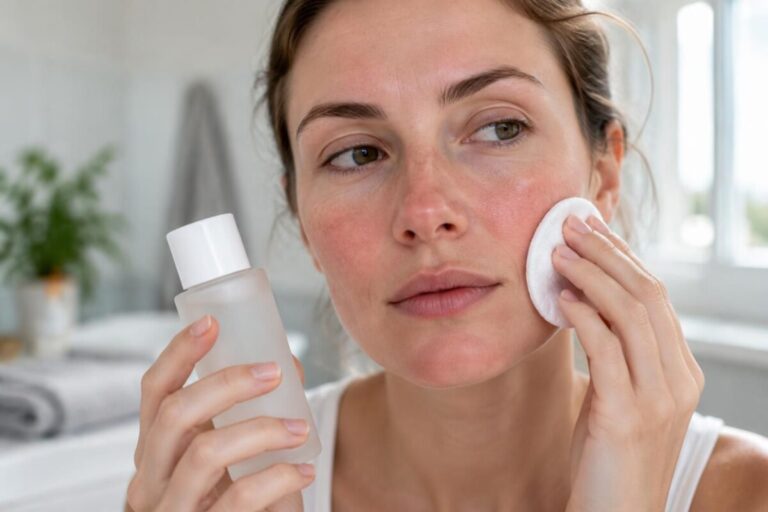
- Step 1: Stop using the serum you suspect is causing the reaction, along with other potent active ingredients. For a few days, stick to gentle products your skin already tolerates.
- Step 2: Once your skin feels comfortable again, reintroduce one product at a time. Testing it on a small area for 24 to 48 hours may help you spot a reaction, but it can’t guarantee that irritation won’t occur later.
- Step 3: If you start using the serum again, use it less often and follow the instructions for its formula. Stop if the signs return; consult a professional if you have a significant or persistent reaction.
If it’s mild discomfort that goes away quickly, space out applications and monitor how your skin responds. If the redness persists, you feel pain, or the reaction spreads, stop using the product and seek professional advice.
You can also check whether your routine is too complicated: starting with products that are too rich can make it harder to identify which product is responsible. To adjust the timing without upsetting your skin, also check these guidelines on when to act without disrupting your skin’s balance.
Choosing a facial serum without piling on active ingredients
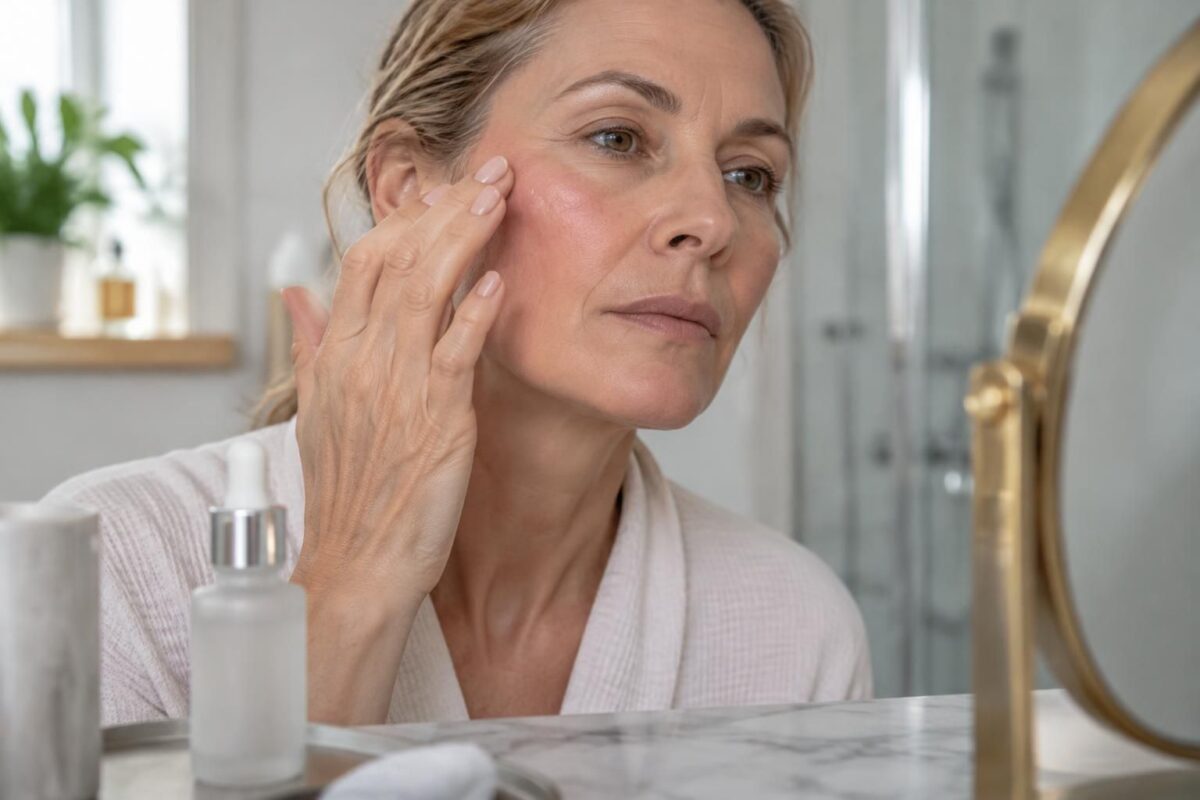
A facial serum doesn’t need to promise a dramatic transformation to earn a place in your routine. A comfortable texture and a formula suited to your needs are often easier to stick with than a cocktail of potent active ingredients. In 2026, routines focused on radiance and comfort have their place too: dull-looking skin isn’t a reason to overload it.
Consistency is more helpful than accumulation. Before adding a product, consider what you’re already using and give your skin time to adjust. A preventive product should fit into your routine without turning every application into a tolerance test.
Frequently asked questions about irritation from anti-aging serums
Is tingling after using a serum always normal?
No. Brief, mild tingling can occur with certain active ingredients, but discomfort that keeps coming back, lasts, or gets worse calls for a break and careful observation.
Can you use retinol if you have sensitive skin?
Sometimes, but you should start gradually and monitor your skin’s tolerance. If your skin reacts, stop using the product and ask a healthcare professional for advice.
What should you do if your skin turns red after using a serum?
Stop using the serum for now, avoid other potent active ingredients, and return to gentle products your skin already tolerates. If the redness persists or gets worse, seek professional advice.
How long should you wait before trying a serum again?
Wait until your skin feels comfortable again. The timeframe depends on the reaction and the product; don’t reintroduce the serum if symptoms persist without seeking professional advice.
Would you be kind enough to leave a comment at the bottom of the article? THANK YOU!
Thanks for reading; Aurore