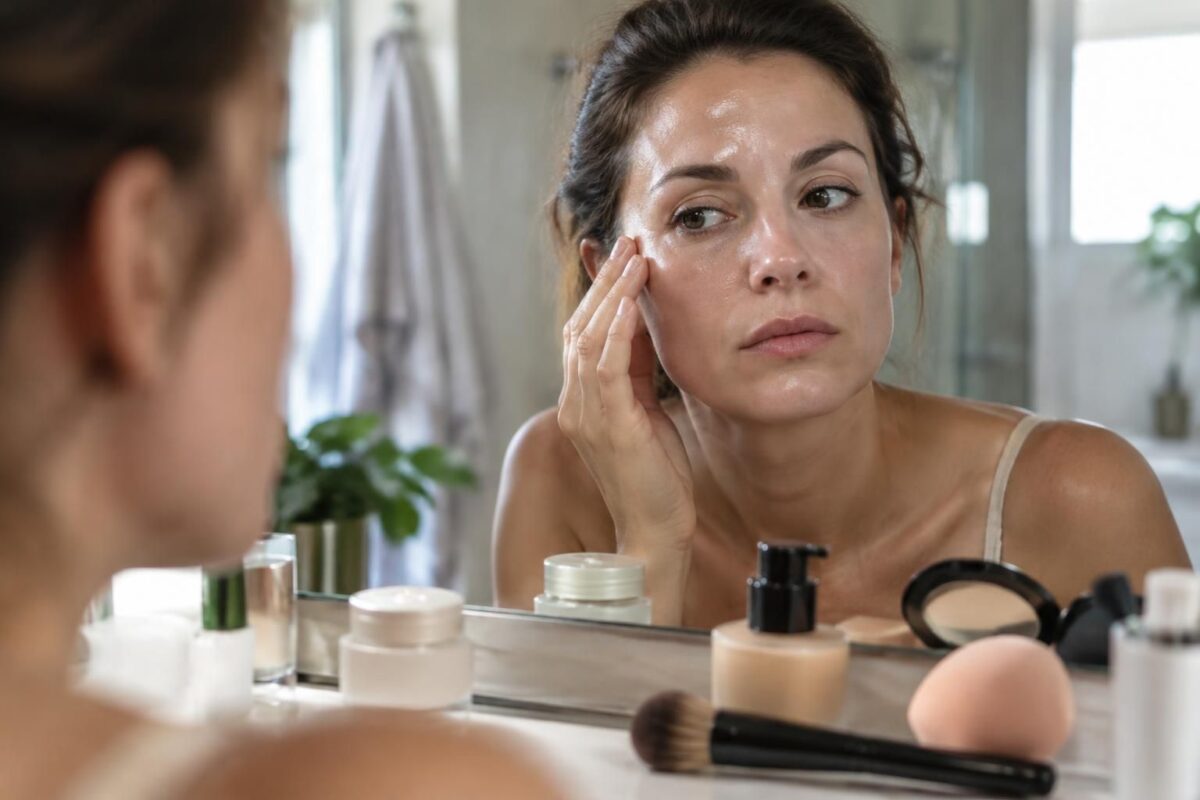
7 Face Makeup Mistakes That Make Your T-Zone Shine
Hi, it’s Aurore. To reduce a shiny T-zone, opt for gentle cleansing, lightweight hydration, and a simpler routine. Over-cleansing or layering cosmetics can increase discomfort without addressing excess sebum. The forehead, nose, and chin often have different needs from the cheeks. Here are seven mistakes to look out for and simple ways to correct them.
Quick fixes
- Replace harsh soap with a gentle cleanser, without scrubbing.
- Rinse with lukewarm water and pat your face dry.
- Choose a lightweight moisturizer suited to your skin.
- Exfoliate moderately, according to your tolerance.
- In the evening, remove makeup and sunscreen without cleansing repeatedly.
If your forehead is shiny but your cheeks feel tight, choose lightweight textures and hydrate the dry areas too. If your skin becomes red or flaky, pause irritating active ingredients and simplify your routine.
7 skincare mistakes that make your T-zone shiny
Shine isn’t always a sign that you need to dry out your skin. Sebum helps protect it, and overly harsh practices can disrupt its balance.
1. Using a cleanser that is too harsh
Harsh soap or repeated cleansing can weaken the skin barrier. A squeaky-clean feeling isn’t the goal: it may be a sign that your cleansing routine is too harsh.
Choose a gentle cleanser and lukewarm water. To compare your options, see this guide to cleansers for combination skin.
2. Scrubbing or exfoliating too often
Frequent scrubbing can irritate your skin and make redness worse. To smooth your complexion, start gently with a suitable exfoliant, then space out applications if your skin feels tight or becomes sensitive.
“Calm skin is better able to protect itself than stripped skin.” Gentle care is often more helpful than intensity.
3. Layering too many products
Using more serums and creams doesn’t necessarily make your routine more effective. Too many layers can feel heavy, especially if the formulas are rich for your oily skin.
A fictional reader, Lina, replaced four layered products with a gentle cleanser and a lightweight fluid. Within a few days, she mainly noticed that her skin felt more comfortable throughout the day.
4. Choosing the wrong moisturizer
Avoiding all moisturizer because your face is shiny can leave your skin feeling uncomfortable. On the other hand, a formula that is too rich can make your skin look shinier: the wrong moisturizer can make your routine more difficult.
Try a lightweight fluid and adjust based on how your skin responds. To tell the difference between combination skin, oily skin, and overtreated skin, read these tips on sensitive or overtreated skin.
5. Overlooking comedogenic products
Some skincare products or foundations may not suit your skin and could contribute to clogged pores or small breakouts. Check the texture, introduce just one new product at a time, and observe your skin over several days.
The term “non-comedogenic” can help you choose, but it doesn’t guarantee the same reaction for everyone. Comedogenic products aren’t the only cause of blemishes.
6. Making makeup mistakes and applying too much powder
Layering foundation, touch-ups, and powder can create a heavy finish that settles on oily areas. The most common makeup mistakes are applying too much product and using powder without first removing excess sebum.
Use a small amount of product and press blotting paper onto your forehead or nose before adding a touch of mattifying powder. Also clean your brushes and sponges regularly.
7. Getting the order or frequency of your skincare wrong
Introducing potent active ingredients too quickly, or following an unsuitable order of application, can cause discomfort and redness. Over-cleansing and piling on exfoliants aren’t shortcuts to clear skin.
Keep your beauty routine simple: cleanse, moisturize, then apply sunscreen in the morning. To review the order of your skincare steps, check out these tips on the order of skincare for the T-zone.
A simple routine to reduce shine
To correct these habits without overhauling your entire bathroom cabinet, make changes gradually. Changing just one step at a time helps you identify what really works for your skin.
- Step 1: In the evening, remove makeup and sunscreen, then cleanse with a gentle product. In the morning, adjust your cleansing routine to your comfort and skin type.
- Step 2: Apply a lightweight moisturizer. Introduce active ingredients gradually and avoid combining several exfoliants.
- Step 3: In the morning, finish with sunscreen. During the day, gently blot shine before touching up your makeup.
| Habit to change | Possible effect | What to try |
|---|---|---|
| Overly harsh cleanser | Tightness or discomfort | Gentle cleanser, lukewarm water |
| Overly rich cream | Heavy, shiny finish | Lightweight fluid, suited to your skin |
| Frequent scrubbing | Redness or sensitivity | Space out applications and monitor your skin’s tolerance |
| Repeated powder touch-ups | Heavy makeup | Blot excess sebum first |
Shine sometimes persists despite a well-chosen routine, because sebum production varies from person to person and over time. If you develop painful pimples, persistent irritation, or flaking, ask a healthcare professional for advice.
Common questions about a shiny T-zone
Should I wash my face in the morning if my T-zone is shiny?
It depends on your skin. Rinsing with water may be enough if your skin is dry or sensitive; a gentle cleanse may be helpful if you wake up with excess sebum.
Does shiny skin need moisturizer?
Yes, if it needs it. Choose a lightweight texture and pay attention to how comfortable your skin feels rather than routinely skipping moisturizer.
Why is my skin peeling after trying a new serum?
This may be a sign of irritation or that you introduced it too quickly. Pause the serum, simplify your skincare, and consider restarting less often if your skin tolerates it.
Should I remove sunscreen even if I’m not wearing makeup?
In the evening, it can be helpful to remove sunscreen and the residue of the day. A gentle cleanse is generally enough; avoid scrubbing or washing repeatedly.
Please leave a comment at the bottom of the article. Thanks for reading!
Thanks for reading; Aurore