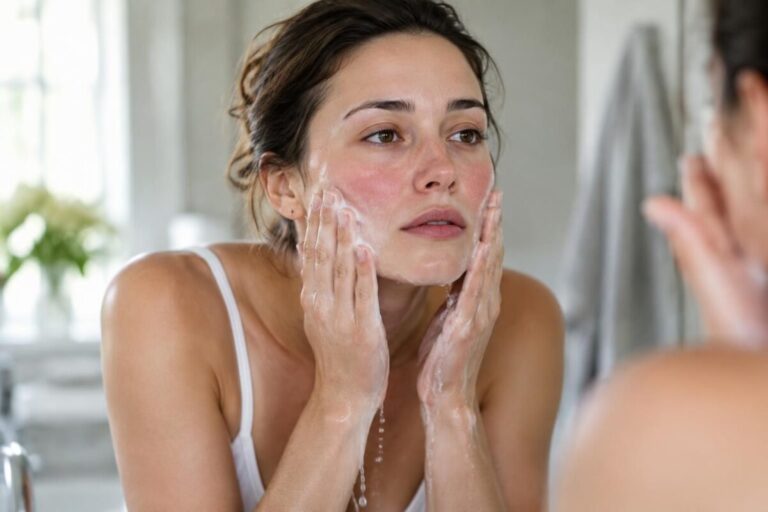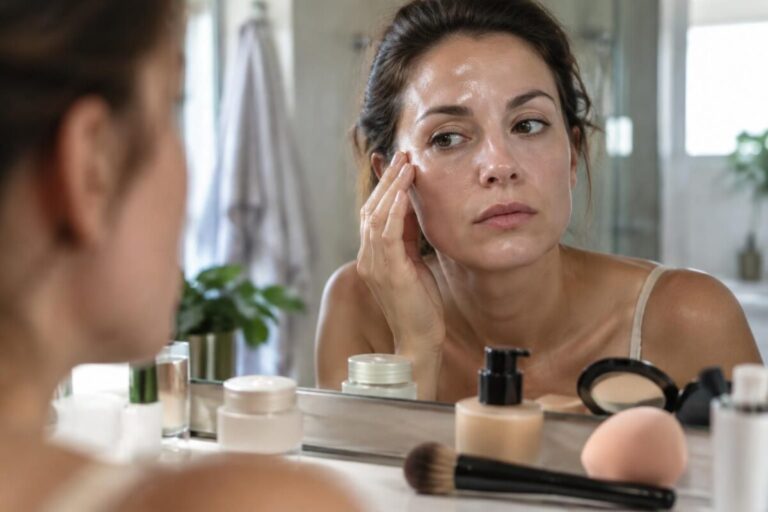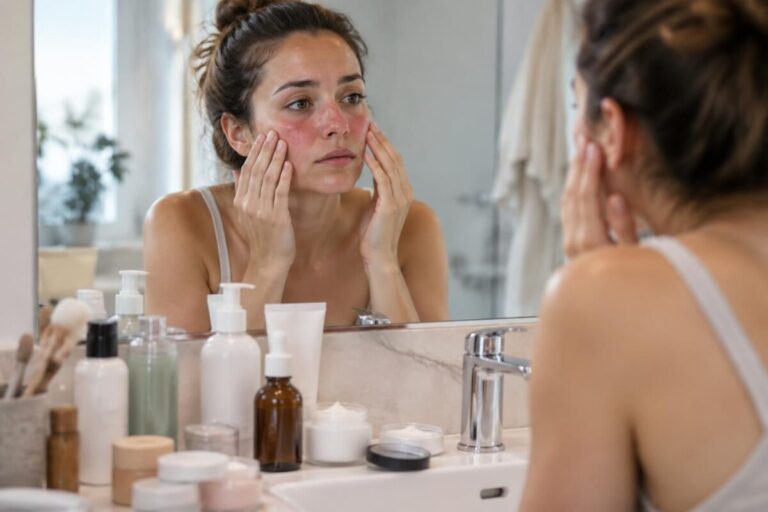
Facial cosmetics: this simple test helps prevent a bad reaction
Hi, it’s Aurore. To reduce the risk of a bad reaction, apply a small amount of the new product to an inconspicuous area and observe your skin for 48 to 72 hours. This simple patch test does not guarantee that you won’t have a reaction, especially if it appears after several days. But it can help you spot some signs before using the product on your entire face.
What to do first
- Choose an inconspicuous area, such as the crease of your elbow or behind your ear.
- Apply a small amount to clean, dry skin.
- Avoid testing several new products at the same time.
- Observe the area for at least 48 hours, and longer if the product contains active ingredients.
- Stop the test if you notice persistent redness, itching, or swelling.
Why test facial cosmetics before using them
A popular cream or an expensive serum won’t necessarily suit every skin type. Reactions depend on your sensitivity, the condition of your skin barrier, and the ingredients in the product. Even a cleanser or shampoo that is too harsh can cause skin irritation.
Retinoids and exfoliating acids can cause irritation, especially if your skin is already dry or compromised. Fragrances and certain preservatives can also trigger an allergic reaction. Testing a product can help you spot a potential problem, but it doesn’t replace medical advice or an allergy diagnosis.
“Try one new product at a time; it’s easier to monitor.” This rule helps you identify the product responsible if your skin reacts. To build a gentler routine, you can also check out these tips for soothing sensitive skin without weighing it down.
How to do a tolerance test in three steps
- Step 1: Choose a clean, inconspicuous area, such as the inside of your arm. Don’t apply the product to broken or already irritated skin.
- Step 2: Apply a small amount, following the product’s instructions. For a rinse-off product, leave it on for the stated amount of time, then rinse as usual.
- Step 3: Observe the area for 48 to 72 hours. If the product is designed to be left on the skin, a delayed reaction may take several days to appear: stay alert and don’t increase the frequency too quickly.
This at-home tolerance test is a precautionary trial, not a medical allergy test. No reaction on a small area doesn’t guarantee that the product will be well tolerated on your entire face.
What signs should you look for after testing a small area?
A mild, temporary sensation can occur with some active ingredients, but persistent burning, itching, significant peeling, blisters, or swelling should be cause for concern. If this happens, rinse off the product and stop using it. If the symptoms are severe or get worse, seek advice from a healthcare professional.
| What you notice | What you can do |
|---|---|
| Redness or stinging that persists | Rinse it off, stop using the product, and monitor how it develops. |
| Itching or swelling | Avoid applying it again and seek medical advice if it persists. |
| No signs after 48 to 72 hours | Start gradually, without combining several new products. |
Irritation or allergy: how can you tell the difference?
Irritation can occur quickly, sometimes within minutes or hours of application. A contact allergy can appear later, after several uses, and may take several days to develop. The signs can sometimes look similar: redness, dryness, itching, or swelling.
If you experience burning or redness that comes on quickly, stop using the product and gently rinse the area. If itching or a rash appears after several applications, stop using it as well and seek advice, as only a professional can confirm an allergy.
One reader started using an exfoliating serum on the same evening as a new fragranced cream: a few days later, her skin was red and dry. By trying the products one at a time, she was better able to identify which one seemed to be causing a reaction.
Helpful precautions for sensitive skin
If you have sensitive skin, start with just one new product and keep the rest of your routine unchanged. Potent active ingredients, fragrances, and harsh cleansers deserve particular attention, but there’s no need to automatically avoid every ingredient in these categories.
A cautious trial is one part of allergy prevention, but it doesn’t replace it. If you’re concerned about an active skincare product, these pointers on the nighttime active ingredient that can leave marks on the skin may help you introduce it more gradually.
When trying a new facial skincare product, don’t test it right after exfoliating or on skin that feels warm or irritated. Clean, dry, rested skin makes it easier to observe any reaction.
Frequently asked questions about patch testing cosmetics
Where should you patch test a cosmetic product?
Choose a small, inconspicuous area, such as the inside of your arm or behind your ear, on clean, intact skin.
How long should you observe your skin?
Observe the area for at least 48 to 72 hours. Some delayed reactions may appear after several days, particularly after repeated exposure.
Does testing on your arm guarantee that the product will suit your face?
No. It can help you spot some signs, but facial skin may react differently, and an at-home test cannot rule out every reaction.
What should you do if irritation appears?
Rinse off the product, stop using it, and monitor the area. If the reaction is severe, persists, or gets worse, seek advice from a healthcare professional.
Thanks for reading; Aurore. I’d be grateful if you left a comment at the bottom of the article. THANK YOU!