3 Skincare Treatments to Quickly Soothe Red Skin
Hello, this is Aurore.
To quickly calm red skin, stop irritating practices, apply a cool compress, then use a soothing fragrance-free cream.
Redness accompanied by a burning or tight feeling may signal a weakened skin barrier, not a lack of care. The priority is therefore to simplify your routine rather than adding several products all at once.
Good habits to help soothe redness
- Rinse your face with lukewarm water, without rubbing or using a washcloth.
- Apply a cool compress for a few minutes, without placing ice directly on your skin.
- Apply a soothing fragrance-free cream in a thin, comfortable layer.
- Take a break from exfoliants, scrubs, and skincare products that cause stinging.
- Protect your face from the sun in the morning with sun protection suited to your sensitive skin.
If redness returns after cleansing or applying a product, the trigger may be in your routine: find out what can make your cheeks red and how to tell the difference between diffuse redness and irritation.
3 skincare methods to quickly calm red skin
1. Cool your skin without irritating it
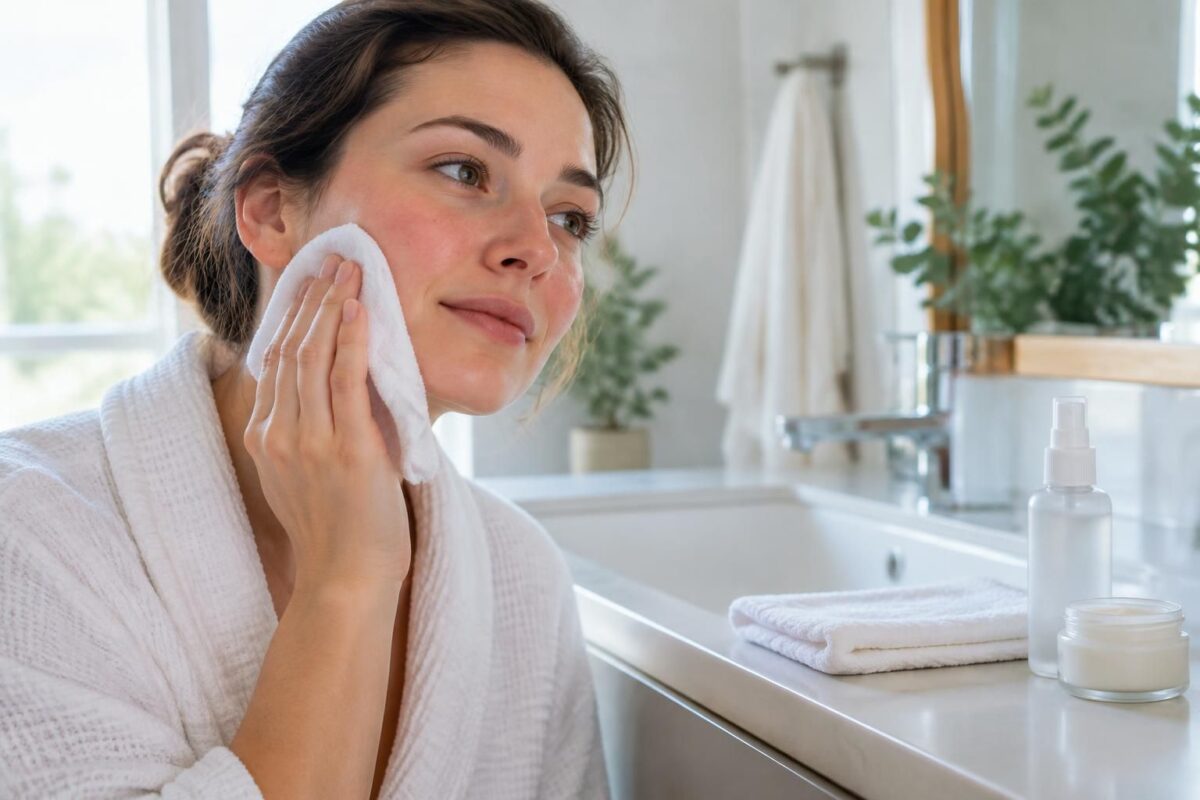
A clean compress dampened with cool water can provide temporary relief when your skin feels hot. Leave it on for a few minutes, then remove it without rubbing: an icy temperature or an abrasive fabric could make the discomfort worse.
If you don’t have a compress, a soft cloth rinsed in cool water will do. The goal is to soothe irritation, not to cause a thermal shock.
2. Keep your moisturizing routine simple
After rinsing, pat your face dry and apply a soothing fragrance-free cream. Formulas containing moisturizing agents such as glycerin or lipids can support the skin barrier and improve skin hydration.
Aloe vera may suit some people, but a plant-based product isn’t automatically suitable for every skin type. Choose a simple formula without fragrance, and test it on a small area first if your skin is easily irritated.
3. Take a break from irritating factors
For a few days, set aside exfoliating acids, retinol, scrubs, and fragranced skincare products. Red skin that burns doesn’t need more intensive cleansing: it mainly needs a gentle, consistent routine.
For example, if your cheeks turn red after using a cleanser, replace it with a gentle formula and see how your skin responds before changing your cream as well. Making just one change at a time helps you identify what actually brings relief.
| What you notice | Helpful step | What to avoid |
|---|---|---|
| Temporary redness and warmth | Cool compress and fragrance-free skincare | Ice and rubbing |
| Tightness after cleansing | Gentle cleanser and moisturizing cream | Hot water and harsh cleanser |
| Small blood vessels that are always visible | Gentle routine and advice from a dermatologist | Relying on a cream to make them disappear |
Diffuse redness may subside as the skin barrier regains its balance, often within two to three weeks. However, visible blood vessels that have become established won’t disappear with cosmetics; a dermatologist can recommend appropriate treatment.
A gentle three-step routine
- Cleanse gently morning and evening with lukewarm water and a gentle product, then pat your skin dry.
- Moisturize without layering multiple products with a fragrance-free cream, applied while your skin is still slightly damp.
- Protect your skin in the morning with suitable sun protection, even when it’s cloudy.
If the redness is accompanied by bumps or pustules, affects your eyes, remains in the center of your face, or gets worse despite these steps, seek advice from a healthcare professional. Skincare can help support reactive skin, but it doesn’t replace a diagnosis.
Frequently asked questions about facial redness
How can I quickly calm facial redness?
Rinse with lukewarm water, apply a cool compress for a few minutes, and use a soothing fragrance-free cream. Avoid rubbing, ice, and makeup while your skin feels hot.
Are cold compresses effective?
A cool compress can temporarily relieve the sensation of heat. Don’t place ice directly on your skin, and remove the compress if the discomfort gets worse.
Is aloe vera suitable for sensitive skin?
Some skin types may tolerate it well, but a reaction is still possible. Choose a fragrance-free formula and test it on a small area first.
When should I see a doctor about red skin?
See a doctor if the redness persists, gets worse, is accompanied by bumps or pustules, or affects your eyes. Blood vessels that remain visible over time should also be assessed by a dermatologist.
I hope you found these tips helpful. Share your experience in the comments! — Aurore